
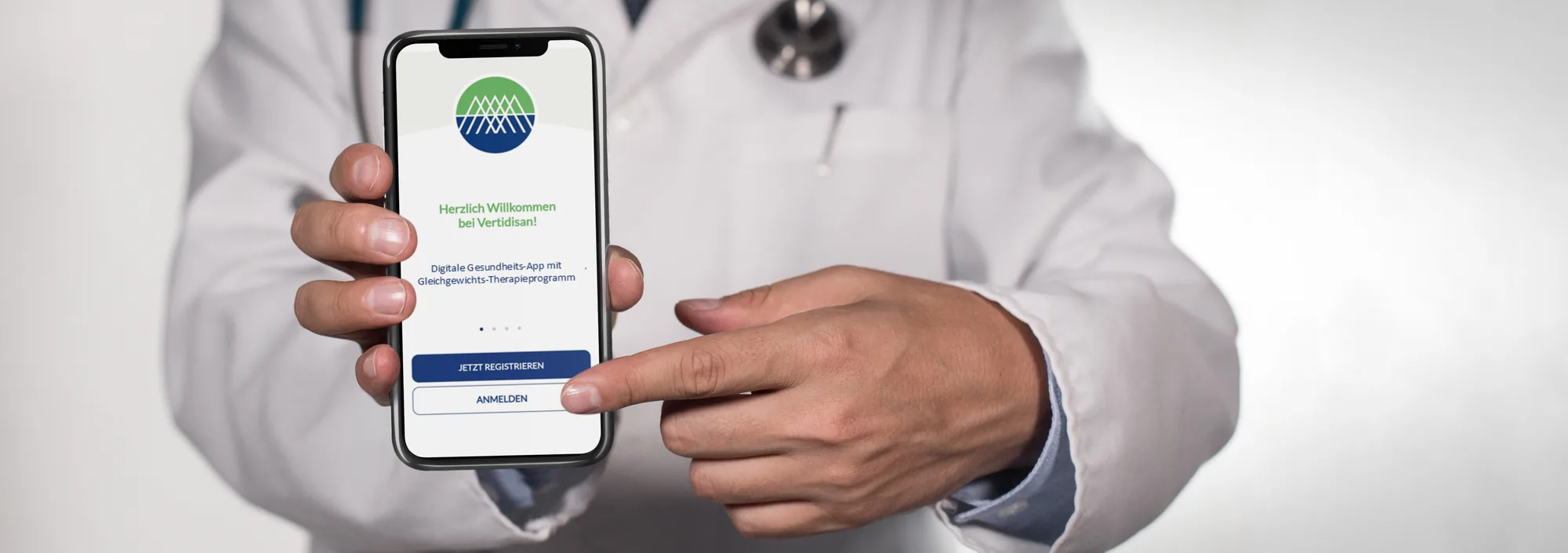
Composition/Content of Vertidisan
The individual components of the VH90D therapy program in specialist detail.
Diagnosis input
The patient enters the medical diagnosis themselves; the therapy is adapted accordingly.
Sensorimotor ABEV vestibular exercises
ABEV balance exercise sequences adapted to the diagnosis, divided into vestibulo-motor and vestibulo-ocular. Result: a central neural learning process with central compensation of the vestibulopathy.
Repositioning maneuvers
BPPN is treated with repositioning maneuvers. With long-lasting BPPN, phobic components can develop; the therapy is then supplemented with CBT, analogous to functional vertigo.
OEP – Otago Exercise Program
Patients with a tendency to fall frequently develop inactivity-related muscle atrophy in the lower extremities. The OEP builds muscle in addition to the ABEV exercises, especially in the legs.
Cognitive behavioral therapy (CBT)
Vertigo is frequently associated with stress, sleep or anxiety disorders; CBT interventions address this as well.
Autogenic training
Trains the perception that the proprioceptive system (nerves, muscle/tendon spindles) plays an important role – especially helpful for neuropathies.
Progressive muscle relaxation (PMR)
Vertigo leads to increased muscle tension with myogelosis and irritation of proprioceptors; PMR reduces this state of irritation.
Compliance & adherence support
Without a correct disease model, therapy is often unsuccessful. Extensive specialist vertigo counseling as well as a knowledge base for health education support adherence.
Findings report / outcome monitoring
Digital or analog findings report available at the patient's request, transferable via the KBV toolkit (§ 355 SGB V) into the practice system or the ePA.
Instructions for evaluating the findings report (PDF, 155 KB)